

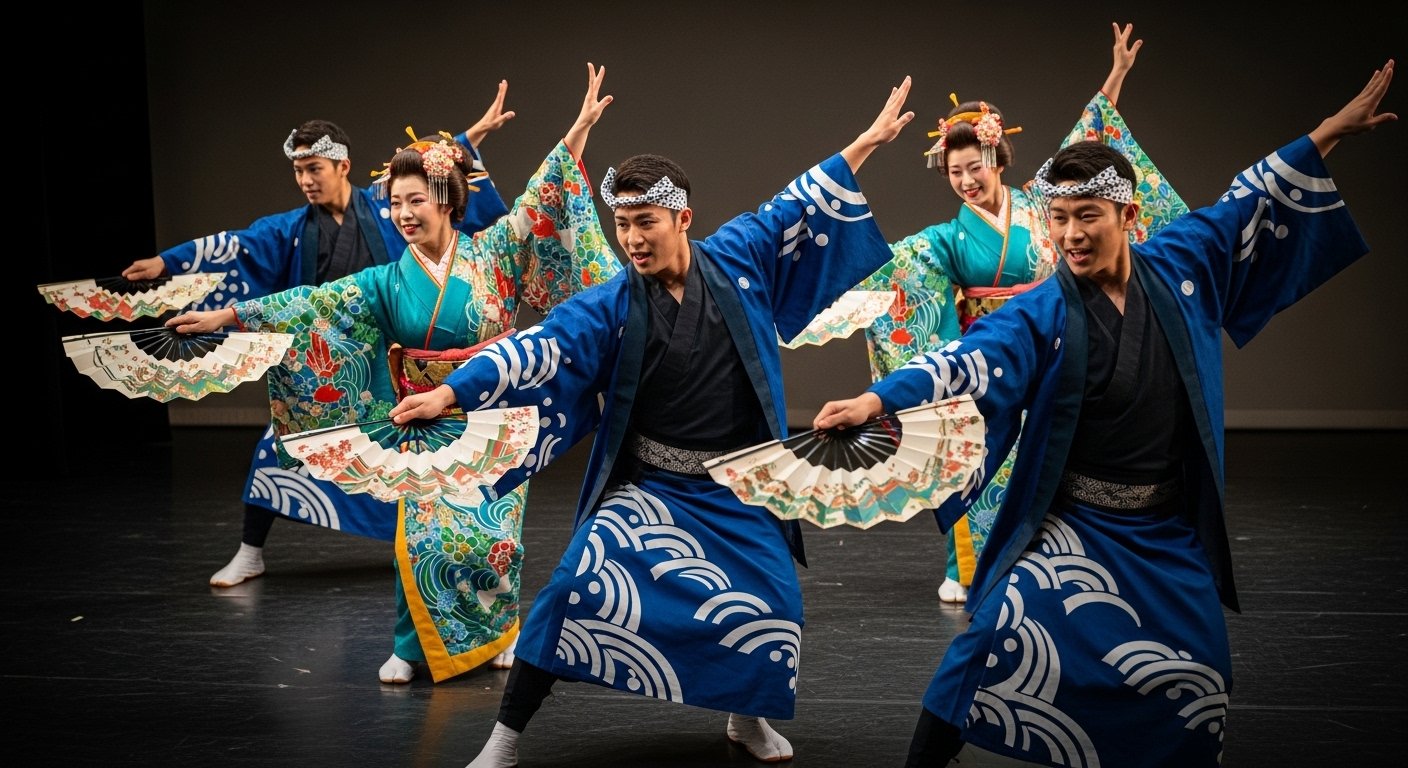
Tsunaihaiya is a traditional Japanese folk dance and festival originating from the Kyushu region, particularly associated with Satsumasendai in Kagoshima Prefecture. The festival features dynamic group movements, vibrant traditional costumes, and rhythmic maritime work songs that celebrate the region’s rich seafaring history and community spirit.
Japan holds a rich tapestry of regional festivals, but few capture the energy of coastal life quite like the Tsunaihaiya. Rooted in the southern maritime traditions, this lively dance transforms quiet city streets into vibrant parades of music, color, and coordinated movement.
Understanding the Tsunaihaiya offers a window into the historical port cultures of Kyushu. Readers of this guide will learn exactly how the dance originated, what defines its unique musical and physical characteristics, and how local communities are working to keep this cultural touchstone alive for future generations.
What is the historical context and origin of Tsunaihaiya?
Tsunaihaiya traces its roots back to the Edo period (1603–1867), evolving from the broader “Haiya Bushi” folk song tradition. Sailors navigating the turbulent waters of the East China Sea and the Sea of Japan originally sang these rhythmic work songs to coordinate their labor on ships.
The term “Haiya” derives from the southern wind (“hae” or “hai”), which was crucial for sailing vessels traveling northward. When these sailors docked in southern port towns like those in Kagoshima Prefecture, they brought their songs to the local teahouses and communities. Over decades, the local townspeople adapted these maritime melodies, blending them with regional instruments and dance steps. The Tsunaihaiya specifically emerged as Satsumasendai’s distinct local variation, honoring both the sailors’ resilience and the town’s welcoming spirit.
What are the key characteristics and features of Tsunaihaiya?
The Tsunaihaiya dance is defined by its low center of gravity, energetic group choreography, and the driving rhythm of traditional Japanese instruments. Dancers typically perform in large, synchronized groups, making it a highly communal activity.
Three primary elements make the Tsunaihaiya distinct:
- Musical Instrumentation: The performance relies heavily on the shamisen (a three-stringed instrument), taiko drums, and the rhythmic clapping of the performers. The music maintains a fast, upbeat tempo that mimics the rolling waves of the ocean.
- Choreography: Dancers use sweeping arm gestures and deep knee bends. These movements directly symbolize the physical labor of sailors hoisting sails and pulling heavy ropes on wooden ships.
- Traditional Attire: Performers wear matching happi coats or lightweight summer kimonos (yukata), often dyed in vibrant reds, blues, and whites. These uniforms identify the dancer’s specific local troupe or neighborhood.
Why is the Tsunaihaiya dance significant in modern Japanese culture?
Tsunaihaiya serves as a vital mechanism for preserving local identity and fostering community cohesion in modern Kagoshima. As rural and regional areas in Japan face demographic shifts, cultural festivals act as a unifying force across generations.
The festival brings together people of all ages, from young school children learning the steps for the first time to elderly musicians playing the shamisen. Local businesses and neighborhood associations sponsor the dance troupes, which strengthens the local economy and encourages civic pride. Furthermore, the annual Sendai Tsunaihaiya festival attracts regional tourism, providing a necessary economic boost to the area while educating visitors about Kyushu’s specific maritime history.
What challenges does Tsunaihaiya face, and what is its future outlook?
The primary challenges facing the Tsunaihaiya festival are Japan’s aging population and the continuous rural-to-urban migration of younger generations. With fewer young people remaining in regional towns like Satsumasendai, organizing large-scale dance troupes becomes increasingly difficult.
Funding also presents a significant hurdle. Creating authentic costumes, maintaining traditional instruments, and organizing city-wide parades require substantial financial investment. However, the future outlook contains reasons for optimism. Local governments have recently integrated Tsunaihaiya training into public school physical education curriculums, ensuring the next generation learns the historical art form. Additionally, festival organizers now actively recruit participants from neighboring cities, expanding the dance’s reach beyond its traditional geographic borders.
How can you experience the Tsunaihaiya tradition today?
The most effective way to experience Tsunaihaiya is by attending the annual Sendai Tsunaihaiya festival held in Kagoshima Prefecture. Visitors can watch dozens of local troupes compete and perform along the main city thoroughfares.
If you plan to attend, arrive early to secure a viewing spot near the main performance intersections, where the choreography is most complex. Many local groups also host open workshops during the festival weekend, allowing tourists to learn the basic steps and participate in the community dances. Supporting local vendors during the festival directly contributes to the ongoing preservation of this historical event.
Frequently Asked Questions about Tsunaihaiya
What does the word “Tsunaihaiya” mean?
The word combines local geographic or thematic identifiers with “Haiya,” a term derived from the word for the southern wind (“hae”). The wind was historically vital for merchant ships sailing from Kyushu to northern Japanese ports.
When does the main Tsunaihaiya festival take place?
The main Sendai Tsunaihaiya festival usually occurs in the late summer or early autumn in Satsumasendai, Kagoshima Prefecture. Exact dates vary yearly based on the local civic calendar, so checking the official Kagoshima tourism board website is recommended.
Can anyone participate in the Tsunaihaiya dance?
Yes, participation is highly inclusive. While the main parade features practiced, organized neighborhood troupes, the festival typically concludes with a “so-odori” (all-hands dance) where spectators, tourists, and locals are encouraged to join the procession.
What instruments are used in the music?
The primary instruments are the shamisen (a traditional three-stringed lute), various sizes of taiko drums, and the fue (Japanese bamboo flute). Vocalists also provide rhythmic chanting and singing to drive the tempo.