

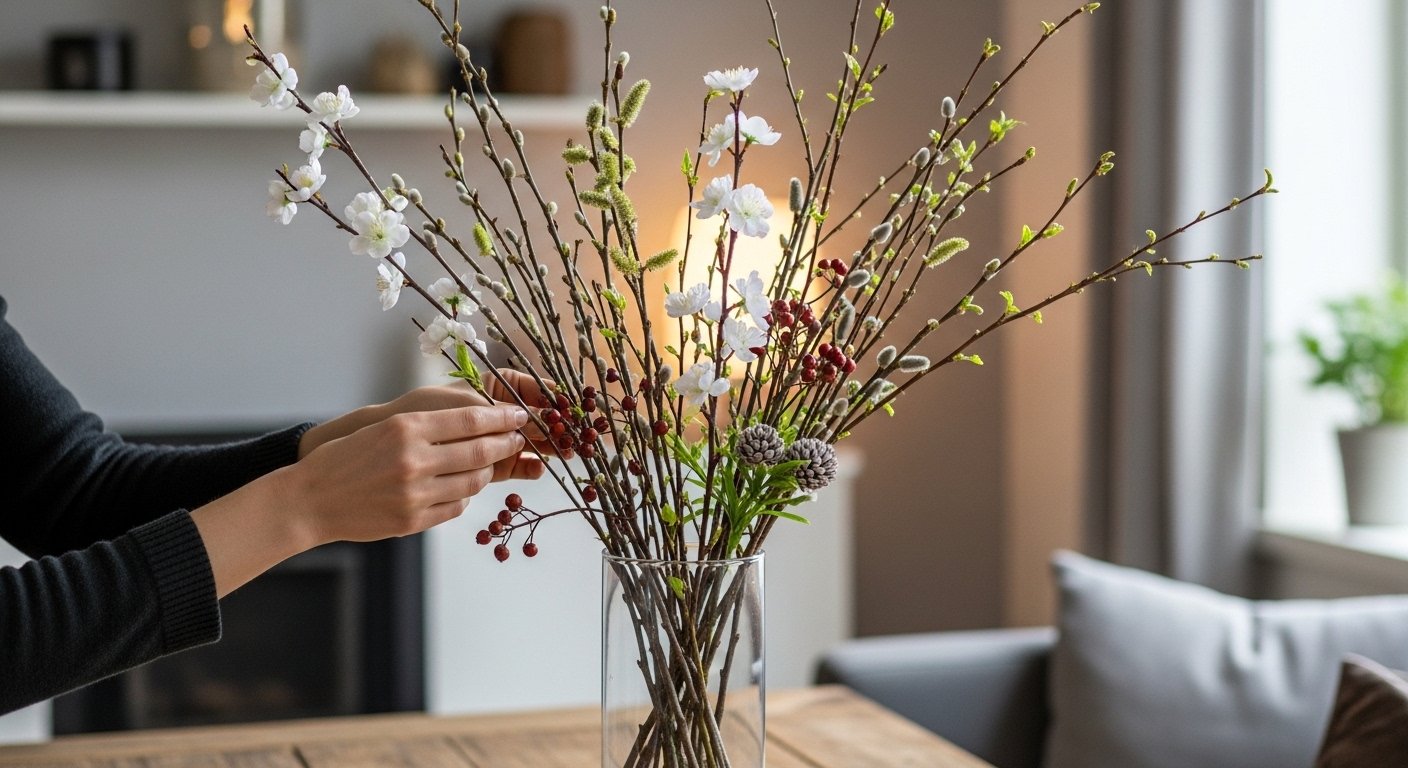
Decorative branches (known as pyntekvister in Scandinavian design) are natural or artificial tree clippings used as eco-friendly interior design elements. They provide a minimalist, textural aesthetic to homes and events. Popular varieties include curly willow, birch, and cherry blossoms, which can last for weeks with fresh water or indefinitely when properly dried.
Interior design constantly evolves, but the human desire to connect with nature remains a permanent fixture in home styling. Biophilic design emphasizes this connection by integrating natural elements into indoor environments. One of the most striking and cost-effective ways to achieve this aesthetic is through the use of decorative branches. These sculptural pieces of nature offer a minimalist alternative to traditional floral arrangements, providing architectural height and organic texture to any room.
The Scandinavian concept of friluftsliv (open-air living) heavily influences modern interior styling. In countries like Norway and Sweden, bringing the outdoors inside during long, harsh winters is a cultural staple. Here, decorative branches—or pyntekvister—serve as a bridge between the sterile indoor environment and the wild outdoor landscape. Unlike delicate flowers that wilt within days, sturdy wooden stems command attention and offer enduring beauty.
Understanding how to select, forage, and maintain these natural elements empowers homeowners to transform standard living spaces into magazine-worthy interiors. By carefully curating different species of wood and foliage, decorators can create dynamic focal points that shift harmoniously with the changing seasons. This comprehensive guide details everything required to master the art of styling decorative branches.
What exactly are decorative branches (pyntekvister)?
Decorative branches are severed tree or shrub stems used specifically for ornamental purposes in homes, offices, and events. Decorators use these wooden elements to add verticality and rustic charm to interior spaces. Rather than focusing on colorful blooms, decorative branches emphasize the structural beauty of wood, bark textures, and the elegant arch of natural growth.
The practice of using branches in home decor stems from ancient traditions. In Scandinavian cultures, people have historically brought birch branches indoors during late winter to force early spring blooming. Today, the modern design industry embraces decorative branches as a sustainable, low-maintenance alternative to imported cut flowers. Because decorators can forage many branches locally, this design choice significantly reduces the carbon footprint associated with commercial floristry.
Furthermore, decorative branches fit seamlessly into a variety of design philosophies. The Japanese art of Ikebana frequently utilizes bare branches to represent the sky or earth, highlighting the importance of empty space. Similarly, modern farmhouse and wabi-sabi interiors rely on the imperfect, rugged appearance of untreated wood to create warm, inviting atmospheres.
What are the most popular types of decorative branches?
The most popular types of decorative branches include curly willow, silver birch, cherry blossom, and eucalyptus. Each tree species offers distinct visual characteristics, ranging from romantic spring blooms to stark, modern architecture.
Why choose curly willow branches?
Curly willow branches (Salix matsudana) provide dramatic, twisting silhouettes that instantly capture attention. These fast-growing branches feature a unique corkscrew growth pattern that looks spectacular when displayed in tall, clear glass floor vases. Curly willow branches dry exceptionally well, meaning homeowners can keep a single arrangement on display for several years without the branches losing their distinctive shape.
When should you use cherry blossom branches?
Cherry blossom branches (Prunus serrulata) are the premier choice for springtime interior styling. These branches produce delicate pink or white flowers that signify the end of winter. Interior designers favor cherry blossom branches for luxury events and high-end residential styling because the blooming branches add a soft, romantic color palette to neutral rooms. While the blooming period only lasts one to two weeks, the high visual reward makes cherry blossom branches highly sought after.
What makes eucalyptus branches ideal for homes?
Eucalyptus branches offer a dual benefit: beautiful muted green foliage and a powerful, refreshing aroma. The menthol-like scent of eucalyptus branches naturally deodorizes indoor spaces and can even help clear respiratory congestion when hung in a steamy shower. Visually, the silvery-green leaves of the eucalyptus plant drape beautifully over the edges of ceramic vases, making eucalyptus branches a favorite for table centerpieces.
How do silver birch branches enhance rustic decor?
Silver birch branches (Betula pendula) introduce striking contrast through their distinctive white and peeling paper-like bark. Decorators utilize silver birch branches to add structural height to tall rooms with vaulted ceilings. The stark white bark of the silver birch stands out brilliantly against dark, moody wall colors, making these branches a staple in contemporary rustic and modern industrial design schemes.
How can you use decorative branches in interior design?
Interior designers use decorative branches to add vertical height, introduce organic textures, and fill empty architectural spaces. Because large branches take up significant visual real estate without looking cluttered, they solve common spatial challenges in large living areas.
Where is the best placement for large decorative branches?
The best placement for large decorative branches is in oversized floor vases positioned in empty corners or spacious entryways. Large branches draw the eye upward, highlighting tall ceilings and making small rooms feel larger. When placing decorative branches in a hallway, the organic shapes soften the hard right angles of doorways and staircases, creating a more welcoming first impression for guests.
How do decorative branches work as table centerpieces?
Decorative branches work beautifully as table centerpieces when arranged horizontally or kept deliberately sparse. To prevent the arrangement from blocking the view across a dining table, decorators select thin, arching branches and place them in low-profile vessels. Alternatively, suspending a large, bare branch directly above the dining table and wrapping the wood in fairy lights creates a breathtaking, floating chandelier effect.
How do you find and prepare your own decorative branches?
You can forage your own decorative branches by safely pruning local trees, cleaning the stems to remove pests, and conditioning the wood for indoor use. Foraging your own materials ensures a fresh supply of seasonal greenery while saving money.
What are the best practices for foraging branches?
The best practice for foraging branches is to harvest responsibly and legally. Foragers should only cut branches from their own property or obtain explicit permission from landowners. When harvesting, use sharp, sanitized secateurs to cut the branch at a 45-degree angle. This angled cut minimizes damage to the host tree and increases the surface area for the severed branch to absorb water later. Foragers must never take more than 10% of a plant’s total volume to ensure the tree remains healthy.
How do you clean and treat fresh branches?
To clean and treat fresh branches, decorators must first strip away any leaves or small twigs that will sit beneath the water line in the vase. Submerged leaves rot quickly, breeding bacteria that will kill the branch and create foul odors. Next, wash the branches gently with a mild soap solution to remove outdoor dust and microscopic pests. Finally, use a heavy tool to smash the bottom two inches of the woody stem; this technique breaks down the dense wood fibers and allows the branch to drink water efficiently.
How should you style decorative branches for different seasons?
You should rotate your decorative branches seasonally to reflect the natural outdoor environment, using blooming branches in the spring and bare, sculptural branches in the winter. This seasonal rotation keeps interior spaces feeling dynamic and connected to the natural world.
Which branches work best for spring and summer styling?
Magnolia, forsythia, and dogwood branches work best for spring and summer styling. Forsythia branches provide explosive bursts of bright yellow flowers, serving as the perfect antidote to dreary winter weather. During the late summer, olive branches offer a Mediterranean aesthetic. The soft green leaves of olive branches pair perfectly with terracotta pots and light linen textiles, enhancing a warm-weather interior design scheme.
What are the top choices for autumn and winter styling?
Red twig dogwood and bare oak branches are the top choices for autumn and winter styling. The vibrant crimson stems of the red twig dogwood inject necessary color into rooms when the outdoor landscape turns gray. During the winter holidays, Scandinavian decorators traditionally use bare birch branches to create a fastelavnsris—a decorative arrangement adorned with colorful feathers and small ornaments. Pine and cedar branches also dominate winter styling, bringing festive evergreen aromas indoors.
How long do decorative branches last and how do you maintain them?
Fresh decorative branches generally last between two to six weeks, while dried or preserved branches can last for several years. The lifespan of any branch depends entirely on the tree species and the environmental conditions inside the home.
What steps increase the lifespan of fresh branches?
To increase the lifespan of fresh branches, homeowners must change the vase water every three to four days. Cloudy water indicates bacterial growth, which blocks the stem from drinking. When changing the water, use secateurs to trim an additional inch off the bottom of the stem to expose fresh wood. Furthermore, decorators should place the vase away from direct sunlight, air conditioning vents, and heating radiators. Extreme temperature fluctuations cause fresh branches to dry out and drop their leaves prematurely.
How do you dry branches for permanent display?
To dry branches for permanent display, remove all water from the vase and allow the branches to dehydrate naturally in a cool, dark, and well-ventilated room. Hanging branches upside down prevents the tips from drooping as the moisture evaporates from the wood. Once fully dried, a light coat of unscented hairspray or specialized floral sealant prevents brittle leaves from shattering and deters dust accumulation.
Elevate your home design with decorative branches
Integrating decorative branches into a living space requires minimal financial investment but yields maximum stylistic impact. Whether foraging for fresh spring blossoms in the backyard or curating a permanent display of twisted willow in the entryway, decorators of all skill levels can successfully utilize these natural elements. By respecting the seasons, understanding basic branch conditioning, and strategically placing arrangements to enhance room architecture, anyone can bring the quiet elegance of the outdoors inside. Explore local floral markets or nearby wooded areas today to find the perfect statement branch for your home.
Frequently asked questions about decorative branches
How much do decorative branches cost?
Commercial decorative branches typically cost between $15 and $60 per bunch, depending on the rarity of the species and the size of the stems. Dried and preserved branches usually cost more upfront than fresh branches but offer better long-term value since dried branches do not require replacement. Foraging branches locally reduces this cost to zero.
Are decorative branches safe for pets?
Not all decorative branches are safe for pets. According to veterinary organizations like the ASPCA, certain popular branches, including eucalyptus, cherry blossom, and yew, contain compounds that are highly toxic to cats and dogs if ingested. Pet owners should choose non-toxic alternatives like pampas grass, spider plants, or artificial branches if animals have access to the floor vases.
What is the best vase shape for tall branches?
The best vase shape for tall branches is a heavy, cylindrical floor vase with a narrow neck. The heavy base prevents the top-heavy branches from tipping the arrangement over, while the narrow neck keeps the individual stems clustered tightly together for a cohesive, upright presentation.
Can you revive wilting decorative branches?
You can often revive wilting decorative branches by re-cutting the stems and submerging the cut ends in warm water. Warm water moves up the woody stem faster than cold water, rehydrating drooping leaves. If the branch has fully dried out and the leaves are crispy, the branch cannot be revived and should be composted or repurposed as a dried arrangement.